Why a Handle Changes the Way an Object Is Used
Why a handle changes the way an object is used: read its shape, placement, and material to understand the grip it invites and whether it suits your routine.
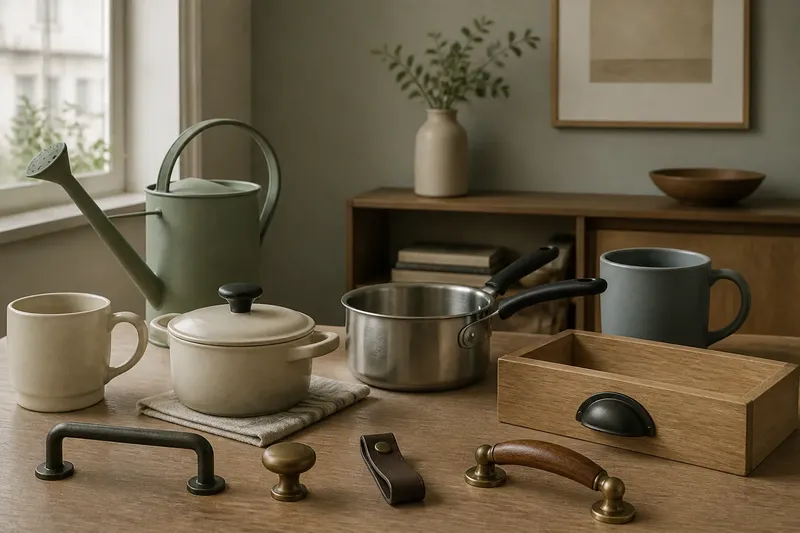
You reach for a mug by its loop, lift it, and bring it to your mouth without thinking about the route your hand takes. A handle changes the way an object is used by giving the hand a particular place to meet it—and by making some motions easier to imagine than others.
That invitation is not a command. A mug can be held around its body, a drawer pull can be tugged sideways, and a tool can be used in a way its maker did not intend. To judge whether a handled object fits your routine, start with the action you need, then look at the grip and movement its handle encourages.
What action does the handle invite?
A handle is a point of contact, but also a small instruction. A loop suggests inserting fingers and lifting; a knob invites a pinch or grasp; a long bar encourages the hand to spread across it and pull. The object’s weight, balance, and surrounding surfaces can strengthen or complicate that suggestion.
Think about the direction of force. A saucepan handle extends away from the hot vessel, making a lift or tilt possible without grasping the body. A cabinet pull is positioned for a pull toward the user. A short tab on a lid may invite a quick lift, though it may be awkward if the lid is heavy or the tab is close to the surface.
For a familiar task, choose the handle that supports the motion rather than the one that merely looks most obvious.
Does the shape fit your grip?
Shape determines how much of the hand participates. A broad, rounded handle can distribute contact across the palm. A narrow loop may be easy to hook with a finger but less comfortable to hold for long. A flat tab can offer a clear pinch point, while a sculpted grip may guide the fingers into one position.
Fit depends on the user and the moment. A loop that suits a bare hand may feel cramped with a thick glove; a small knob can be manageable for a light drawer but tiresome on a stiff one. If several people share an object, look for a grip that allows more than one comfortable hand position.
Imagine choosing a watering can for a narrow balcony. If its handle sits high above the body, the hand may lift the can while keeping the spout aimed outward; if the grip is too small for the user’s gloves, a two-handed hold may be more practical. The useful choice is the one that makes the intended pour controllable in that setting.
Where is the handle placed?
Placement shapes balance and reach. A handle centered over an object often supports lifting it upright. A side handle can make pouring or turning easier, but it may shift the load away from the wrist. Two handles can make a bulky object easier to carry with both hands, provided they are positioned where the arms can reach them naturally.
Also consider what the handle has to clear. A cup handle may need room beside another cup; a drawer pull must leave enough space for fingers without catching nearby clothing. A handle can be perfectly comfortable in isolation and inconvenient in a crowded shelf, cupboard, or work area.
For an object that will be carried through a doorway or stored tightly, check the handle’s path as well as its grip.
Which material suits the contact?
Material affects texture, temperature, flexibility, and the impression of weight. Wood may feel warm and slightly yielding under the hand; metal can feel firm and cool; molded plastic may provide a textured surface or a smooth one. These qualities influence how confidently someone grips the object, though they do not determine its actual use on their own.
Look at the contact surface in relation to the task. A polished handle may be pleasant for a dry, brief lift but feel slippery with damp hands. A textured surface can offer more purchase, while ridges may collect grime or irritate a hand during repeated movement. For kitchenware, tools, or children’s objects, follow the maker’s care and use instructions; material and finish affect what cleaning or handling is appropriate.
Pick a material for the conditions of contact, not simply because it matches the object’s body.
What should you choose for your situation?
The best handle depends on the job and the person doing it. Use these distinctions to sort a choice before focusing on appearance:
- For lifting a light object briefly: a loop, tab, or small knob can work if it offers a clear grip and does not press uncomfortably into the fingers.
- For carrying a heavier object: favor a grip that lets the hand share the load across more contact, or a pair of handles that supports a balanced two-handed carry.
- For pouring or tilting: look for placement that gives the wrist room to control the direction without forcing the hand close to the contents.
- For repeated pulling: a bar or substantial grip may suit better than a tiny knob, especially if the object resists movement.
- For shared use: choose a form that accommodates different hand sizes and positions rather than prescribing one narrow grip.
- For crowded storage: consider a low-profile handle that does not snag, while checking that it remains easy to grasp when needed.
These are starting points, not rules. If the object is used in a way that differs from its intended purpose, judge the actual motion and contact rather than assuming the handle tells the whole story.
What questions help you read a handle?
Does a loop handle always mean the object should be lifted?
No. A loop may support lifting, but it can also help stabilize an object or control a turn. The object’s balance and the direction of force matter as much as the loop’s shape.
Is a larger handle always more comfortable?
Not necessarily. A broad grip can spread contact, but a handle that is too large may be difficult to wrap a hand around. Comfort depends on the user, the load, and how long the grip is held.
Can a handle reveal what an object was made for?
It can suggest a likely action, such as pulling, lifting, or pouring, but it cannot settle the question by itself. People adapt objects, and a handle’s placement may serve storage, display, or a secondary use.
What if the handle feels awkward during use?
First consider whether the object is being held in the intended direction and whether the load is balanced. If the grip remains uncomfortable or difficult to control, a different object or a safer handling method may fit the task better.
How can you separate intention from use?
Design clues describe an invitation, not a record of what people actually do. A decorative drawer pull might be too delicate for frequent tugging; a jar with no handle may be easier for some people to hold around its body. Habits, accessibility, storage, and personal preference all affect the final grip.
When assessing an object, describe both parts plainly: what the handle appears to encourage, and how the object is actually handled in its setting. That distinction makes the reading more accurate—and keeps a tidy design idea from being mistaken for a tidy account of everyday life.
So, when deciding why a handle changes the way an object is used, ask what motion it makes available, who can perform it comfortably, and what the surrounding space permits. The answer is usually found in the hand’s route, not in the handle alone.